PHOTOS AND VIDEO BY JOHN PRINCE
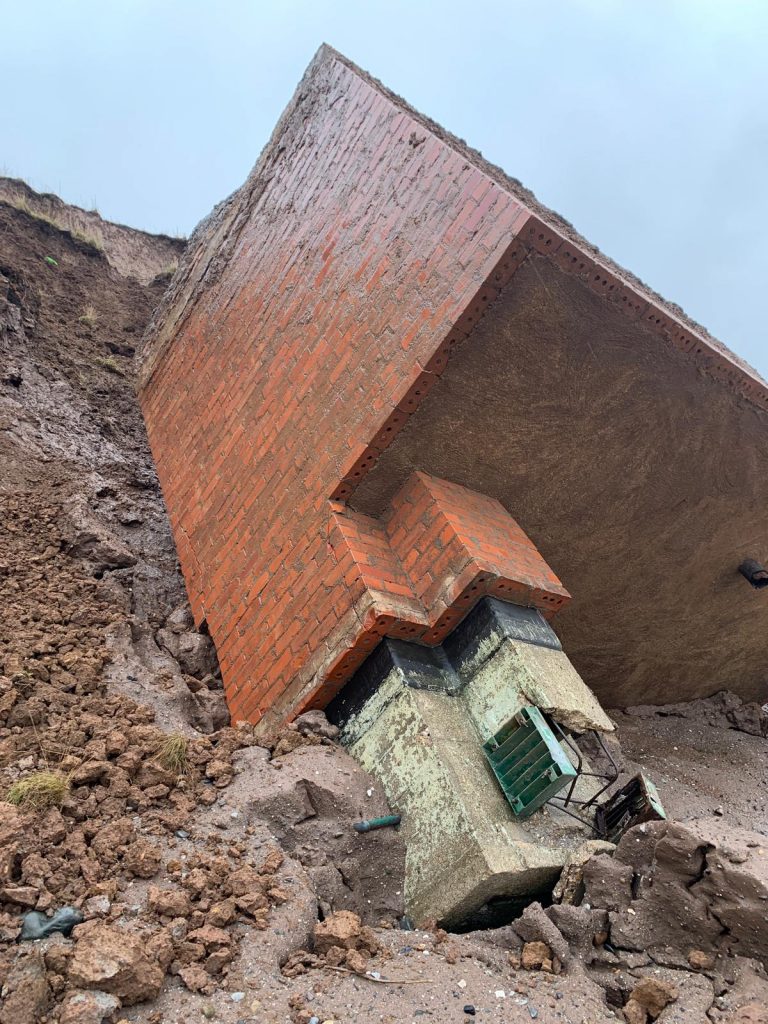
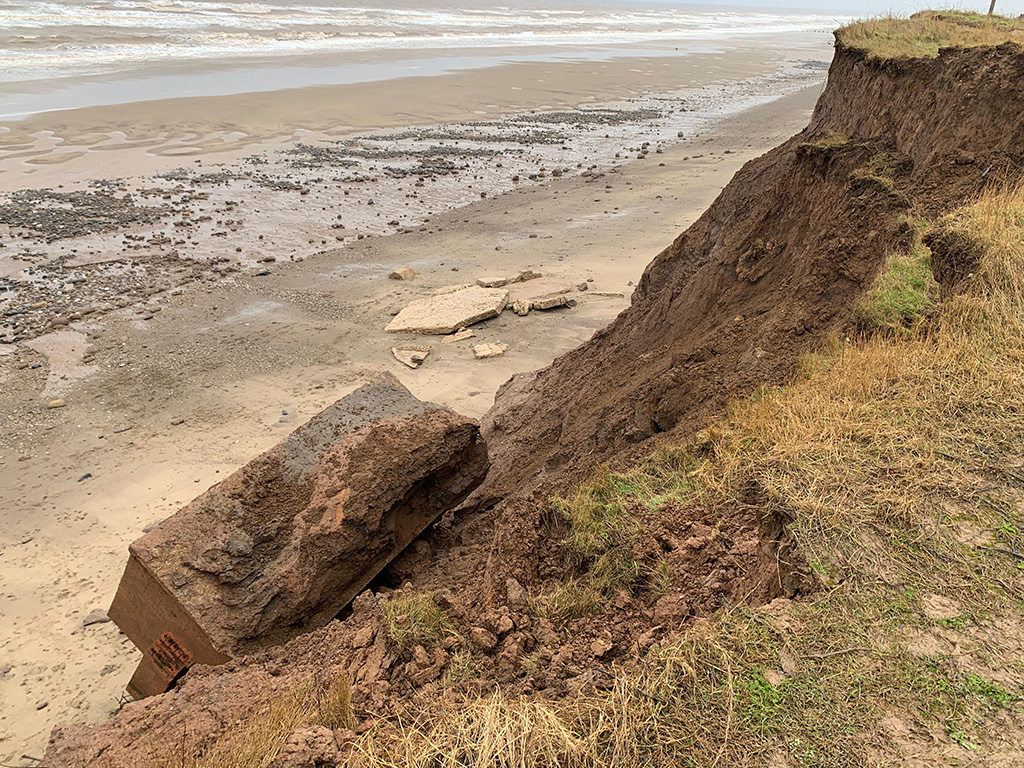
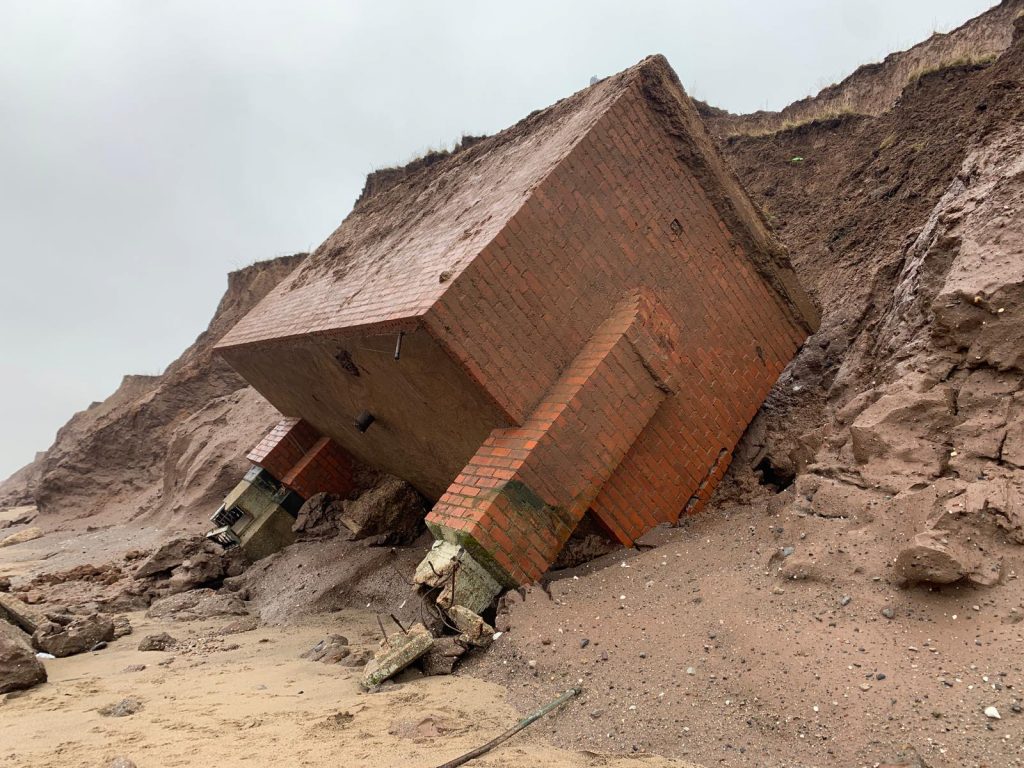
An old nuclear monitoring post perched on the edge of the eroding cliffs near Tunstall has finally fallen down, following days of national attention focused on its precarious position.
The former Cold War-era structure fell at some point overnight on Thursday, January 22, into Friday, January 23, after gradually leaning further and further out from the cliff edge in the past couple of weeks.
The once-hidden brick and concrete bunker, thought to be around 70 years old, had become a spectacle as severe coastal erosion left it jutting out above the beach below, prompting safety concerns and widespread interest beyond the region.
Built in the late 1950s, the structure was commissioned and operated by the Royal Observer Corps as part of the UK’s Cold War civil defence network. It was used for nuclear blast detection and radiation monitoring, with two small underground chambers designed for short-term occupancy by volunteers.
The post was decommissioned in the early 1990s.
When it was first constructed, the bunker sat around 100 yards inland from the shoreline. However, decades of erosion along the east coast meant it was eventually left hanging around 25ft above the sand and rocks, an area regularly used by walkers and fishermen.
Experts had warned that its collapse was inevitable. The station, built from brick and reinforced concrete, was estimated to weigh between 30 and 40 tons.
Before the building fell, East Riding Council confirmed that the authority did “not have any statutory responsibilities connected to the structure”.
In a statement, the council said: “The structure sits on an area of privately owned land.
“This location lies within Policy Unit E (Rolston to Waxholme) of the Shoreline Management Plan. The approach for this location remains at ‘no active intervention’.
“Therefore, the coast is undefended in this area, which allows coastal processes to continue.
“The Ministry of Defence originally requisitioned the land to build the structure.
“But following its closure, the land was returned to the landowner. which included any military infrastructure upon it.
“The responsibility for this infrastructure therefore belongs to the landowner, and the management responsibility for the rural beach in this area sits with the Crown Estate.”