



by John Prince
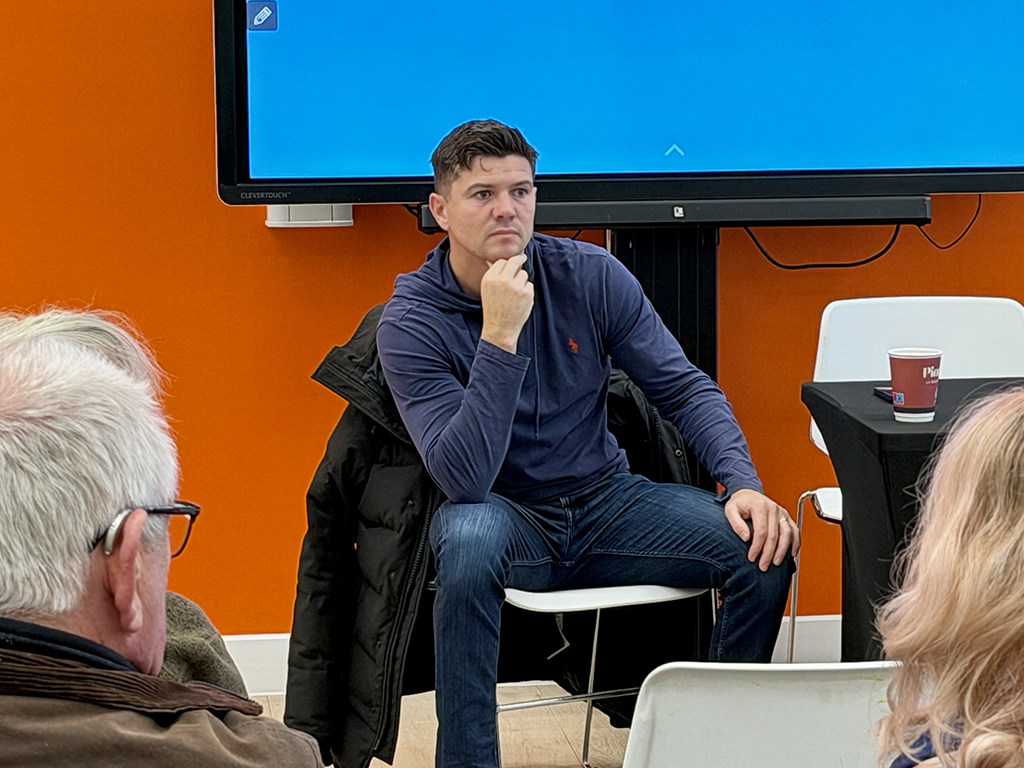
The mayor of Hull and East Yorkshire Combined Authority Luke Campbell has promised to bring bus company bosses face-to-face with Hornsea residents following a long-awaited meeting at which he heard a catalogue of concerns about public transport in the town and surrounding villages.
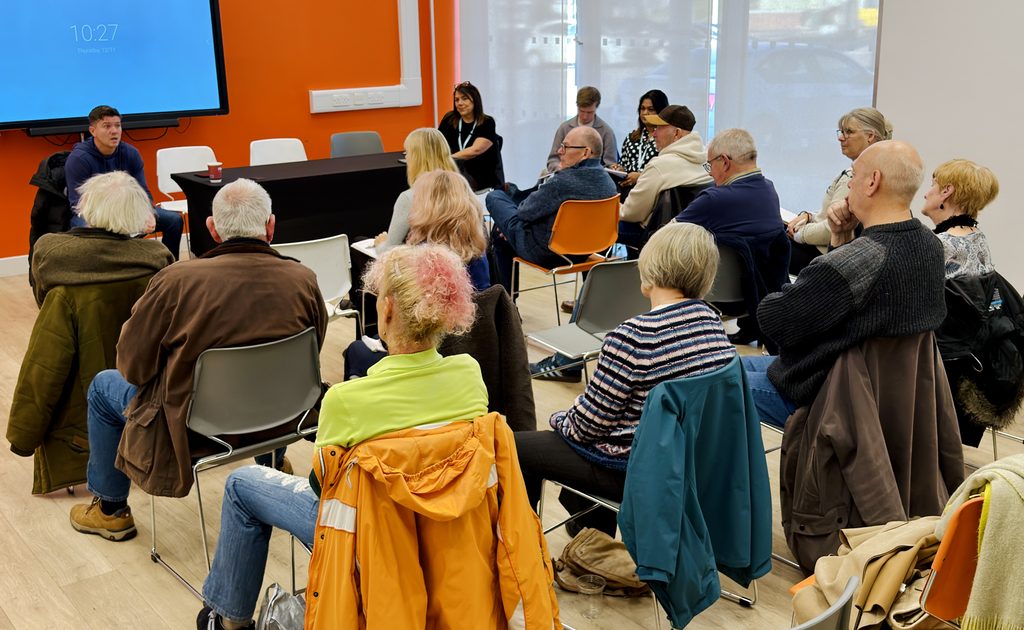
Mr Campbell met with the Hornsea Residents’ Transport Forum on Thursday, November 12, after members had been trying for some time to arrange a meeting to discuss the difficulties faced by people relying on local bus services.
Running aptly late because of traffic problems, Mr Campbell spent around an hour listening to concerns about unreliable buses, poor connections, unsuitable timetables and the difficulties of travelling to hospitals, workplaces, colleges and neighbouring towns.
The meeting resulted in a commitment to use his mayoral powers to convene a further gathering involving senior representatives of East Yorkshire Buses and Stagecoach, allowing residents to put their concerns directly to the operators.
It also prompted an acknowledgement from Mr Campbell that Hornsea and other communities may have been left behind when it came to investment and services.
Speaking exclusively to the Gazette afterwards, he was challenged over the perception that attention had been directed towards larger towns such as Beverley and Bridlington, while Hornsea and other parts of Holderness had been overlooked.
“Maybe they have. I think a lot of places have been left behind,” he said.
“But we’re here now. We’ve seen you. We’ve listened to you. Then we’ve got to action it.
“You won’t get me here again coming for another listen. You’ll get me here again answering the questions that you’ve asked today.”
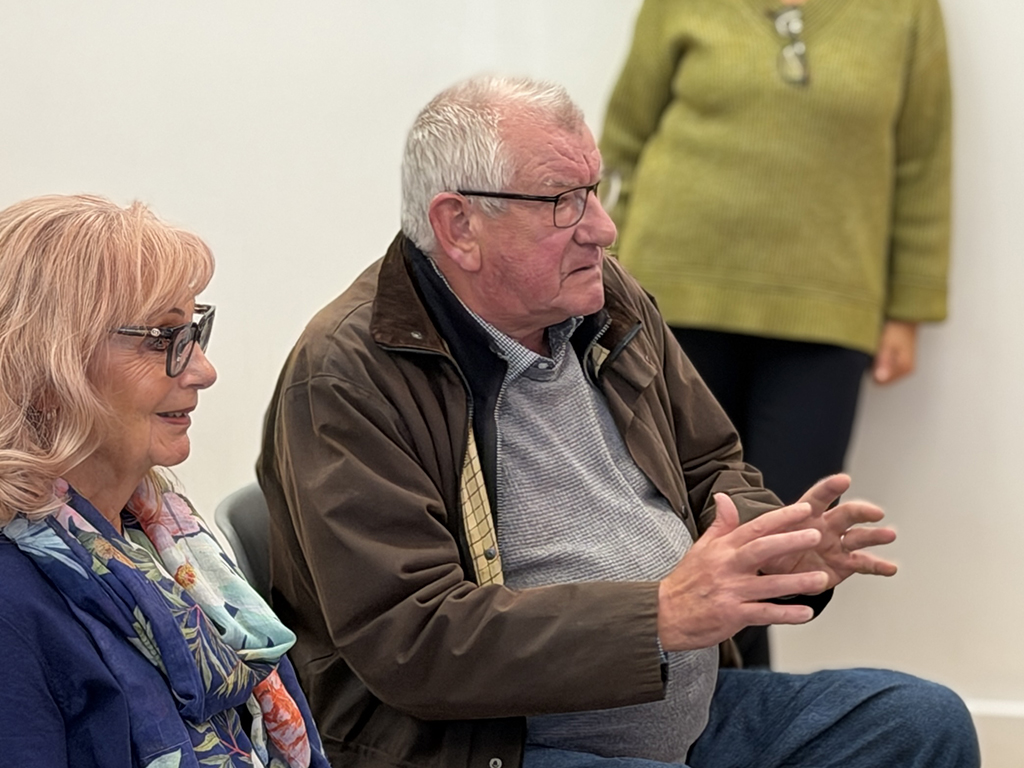
The forum meeting saw residents put forward examples of how existing bus services were failing to meet the needs of the community, with many arguing that relatively small changes could make a significant difference.
One of the first concerns was the reliability of the 24 and 25 services, Hornsea’s main connections with Hull and Beverley.
Members complained about older vehicles being used on rural routes, with breakdowns leaving passengers stranded and replacement buses sometimes having to travel from Hull or further afield.
With Hornsea no longer having its own bus depot, residents said breakdowns could be particularly serious for people travelling to work, college or medical appointments.
Mr Campbell described the situation as “just not good enough” and agreed that reliability was essential to restoring confidence in public transport.
Residents also questioned why new housing developments around Hornsea had been built without adequate bus connections, leaving some people facing walks of more than a mile to reach services in the town centre.
Suggestions included minor diversions to existing routes and changes to the 550 service to cover more residential areas and provide better connections with the 24 and 25.
One proposal was to replace a larger vehicle with two smaller buses, potentially allowing more frequent services and access to roads unsuitable for full-sized buses.
A resident living on Rolston Road said the last local buses serving the area were at around 4pm, making it difficult to visit shops, pubs and other businesses in the evening without alternative transport, saying she felt as if residents were being ‘locked in their houses’.
The difficulties of reaching hospitals prompted particular concern.
Residents described problems travelling to Castle Hill Hospital following the loss of a direct service, with journeys now involving changes at Beverley and lengthy waits between connections.
Community transport services, including those operated by HART, provided an alternative for some passengers but faced challenges including a shortage of volunteer drivers and restricted operating hours.
Mr Campbell asked whether closer working arrangements could help, including the possibility of financial support for additional drivers.
“We could subsidise salaries to service the community. That’s what we’re here for,” he said.
Other complaints centred on the lack of early morning and late evening buses.
One resident pointed out that the first direct train from Hull to London leaves at around 7am – the same time as the first bus from Hornsea – making it impossible to catch the train using public transport from the town.
The last direct bus from Hull to Hornsea was said to leave at around 7pm, preventing residents from attending many evening theatre performances, concerts and sporting events without arranging alternative transport. A taxi fare was said to be around £35.
Members also highlighted limited services to Bridlington, particularly during winter, and early evening departures which make it difficult to spend a full day there.
Sunday services were another source of frustration, with residents arguing that more frequent buses could benefit locals and visitors while helping alleviate traffic congestion during the tourist season.
The mayor acknowledged that additional services would need sufficient passengers to justify their cost, while residents suggested improvements could be introduced on a trial basis to establish demand.
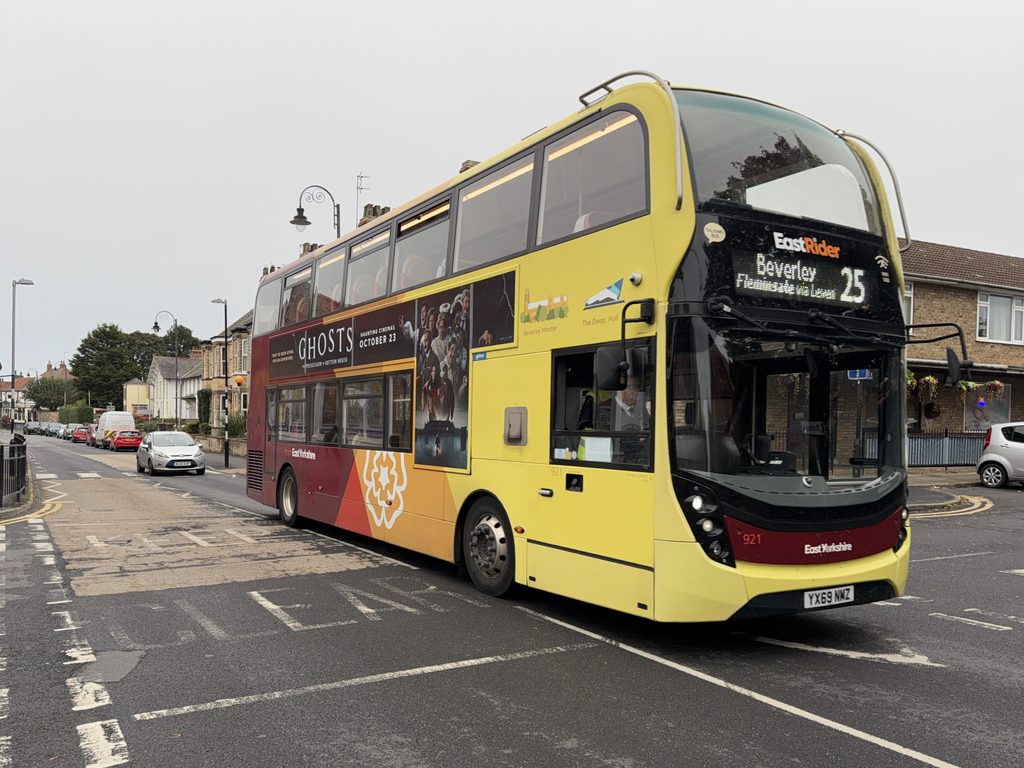
Another issue involved a change to the departure time of the 25 service from Cliff Road, which residents said had been brought forward from 9.30am to 9.25am.
The change meant concessionary bus pass holders could no longer use the service free of charge, leaving some with the choice of paying or waiting another hour.
However, restrictions on concessionary travel in the East Riding will be lifted from April 2027, when Hull and East Yorkshire Combined Authority (HEYCA) completes its phased transition to taking responsibility for regional public transport.
From that date, eligible older and disabled pass holders will be able to travel free at any time of day across Hull and East Yorkshire, bringing East Riding residents into line with the all-day concessionary travel already available in Hull.
The transfer of transport responsibilities will also give HEYCA a greater role in shaping the regional bus network.
Mr Campbell told the forum: “Transport comes into my office in April 2027. That’s when I will be running more areas of transport and the commitment then sits with me.
“But in the meantime, we can make tweaks. There’s no reason why not.”
He said he had signed off a feasibility study examining different models for public transport, including bus franchising, similar to the system adopted in Greater Manchester.
However, he stressed that no decision had been made on whether franchising would be the right approach.
“I’m doing a feasibility study on all models, franchising being one of the models,” he said.
“Because it’s got to be right for the region, and it’s got to serve the residents. And if it’s not serving the residents, then franchising isn’t always the answer.”
He added: “We can’t put our bus routes together without the residents telling us what they need. These bus routes are already set, but clearly they are not benefiting the residents at all.”

The mayor also outlined plans for an integrated ticketing system, saying there were currently 56 different bus tickets across the region.
He said work was under way to simplify travel between different operators and eventually integrate bus and rail journeys.
Another ambition was to introduce digitally connected bus stops displaying real-time arrival information on screens. Mr Campbell promised that Hornsea would be included in a proposed pilot scheme.
“You are at the top of the list. I promise you that,” he told residents.
“We will be piloting some, and I’ll make sure you’re in that. Hundred per cent.”
The discussion also covered traffic congestion, parking enforcement, problems caused by visiting coaches and prolonged roadworks on key routes into the town.
Although responsibility for many of these matters remains with East Riding Council, Mr Campbell agreed to raise them with the relevant authorities.
His team also proposed working with the forum to gather wider feedback from residents, including those in surrounding villages affected by changes to bus routes and timetables.
A further public meeting is expected to be arranged, with a larger venue needed to accommodate more residents.
Mr Campbell was asked by the Gazette on why transport connections had deteriorated to the point where people struggled to reach hospitals or make early rail connections.
He said finance was inevitably a factor, but questioned the lack of accountability for previous decisions.
“Who’s getting held responsible? Who’s the accountable person or team? There has never been.
“Now I’m here. I am the accountable person. I am the one that takes all the responsibilities, even for stuff that hasn’t got to do with me.
“Now it’s different. Now the people have a figure, the mayor, to hold accountable.”
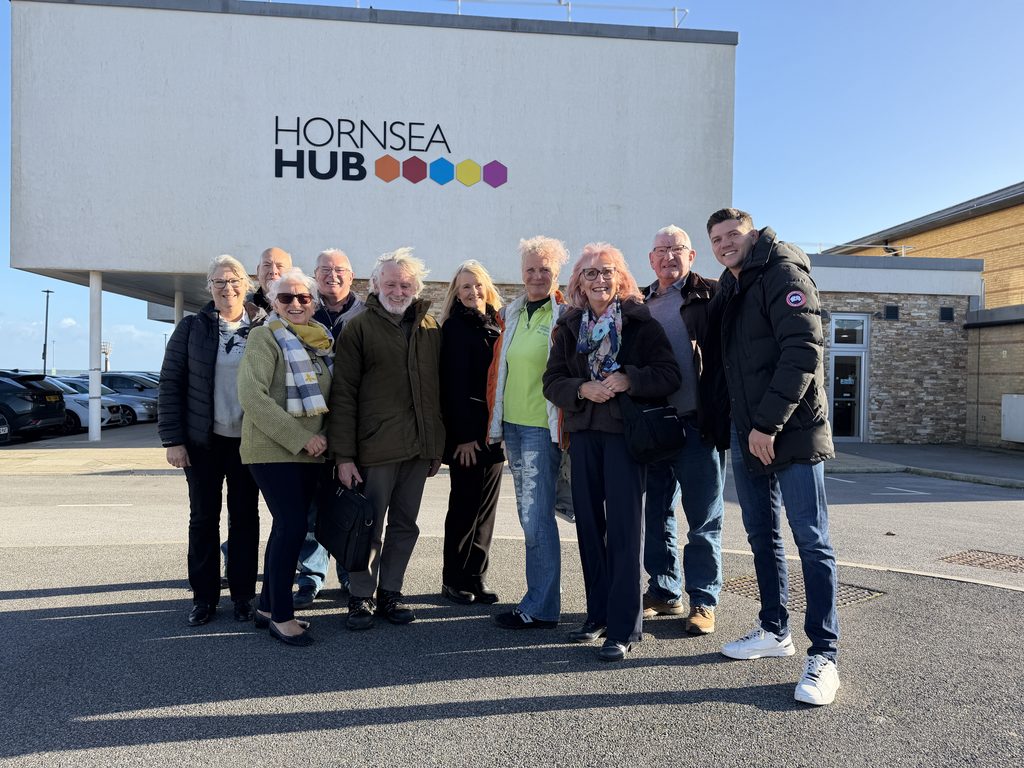
Asked what specific action Hornsea residents could expect, he reiterated his promise to bring the bus operators to the town.
“There are bus routes and bus timetables that need adapting,” he said.
“I’m going to convene a meeting with the leaders of the bus companies and get them in front of the residents.”
However, when asked whether Hornsea would now become a priority, he said it would be unfair to put one community ahead of another.
“The region is my priority,” he said.
“There’s not just a problem with connectivity in Hornsea, there’s a problem in our rural communities, and it would be unfair for me to put a certain place before any others.”
Mr Campbell acknowledged residents’ frustrations but said he was determined to deliver improvements rather than simply make promises.
“I always say actions are louder than words,” he said. “I’m here today to listen, and there’s been a lot of issues. I’m all about actions.”