


by Rebecca Hannant
St Patrick’s Church in Patrington has launched a £100,000 campaign to restore its historic church bells.
Dating to the 13th century and completed in the 14th, the Grade I listed church – known as the Queen of Holderness – is notable for its unusually large size for a small village.
Church treasurer Malcolm Watkinson said this reflected Patrington Haven’s history as a thriving wool port with strong links to the Humber, while the church also stands on land previously owned by the Archbishop of York. Masonry within the building suggests the craftsmen who worked on it may also have worked on York Minster.
Malcolm said: “People wonder why such a magnificent church exists in a village of only 2,000 people. In the 14th century, this was a wealthy dock known as Patrington Haven.
“The local merchants funded this church to secure their place in heaven, but after a massive sea surge destroyed the haven, the industry collapsed and moved to Hull, leaving this grand cathedral-style church standing alone. Farmers will tell you when they plough the fields over there and were coming up with all sorts of shells and sea artefacts.
“While the current church was built in the 14th century, we believe it sits on even older history. There are foundations at the end of the church from a previous structure, and we suspect there might even be Roman foundations beneath those.”
For centuries, the church has served as a community hub and a place of remembrance, with regular community events and a prominent war memorial.
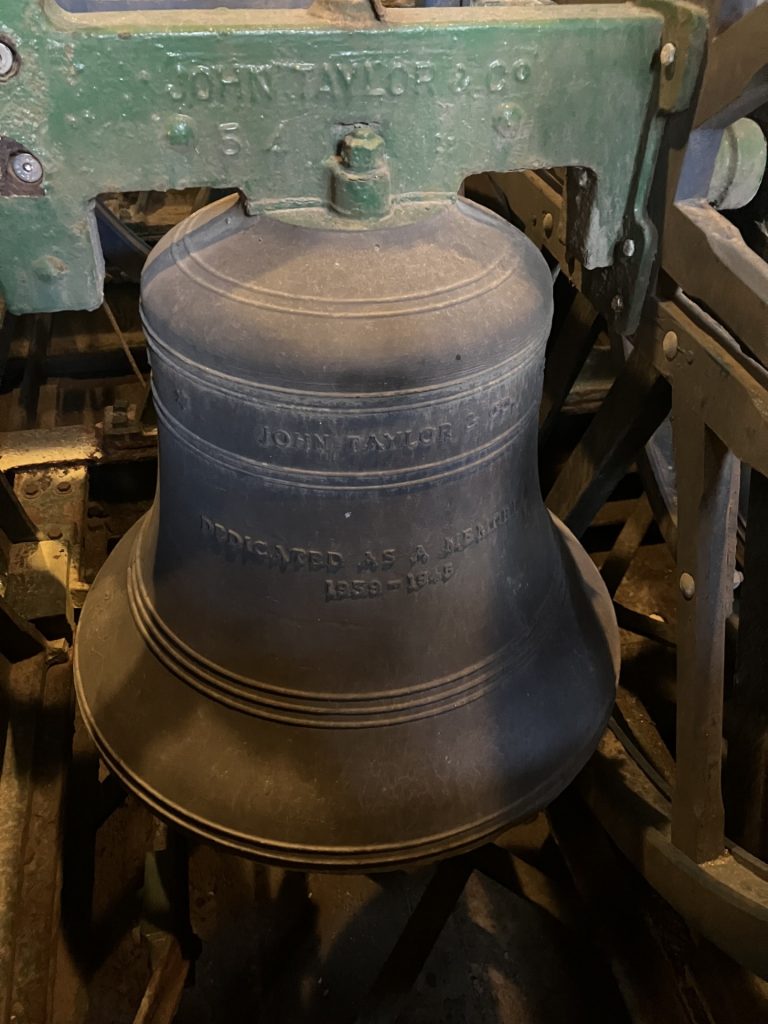
Two of its eight bells are dedicated to six local Second World War servicemen whose names are recorded on a plaque.
Those commemorated include Leonard Foster, born in Patrington around 1899, who served in the Merchant Navy on SS Empire Sky and died after the ship was torpedoed by a U-boat about 20 miles southeast of Spitsbergen. Also remembered is signalman Roy Raleigh, who served on HMS Barham, died aged 18 in 1941 after the ship was torpedoed in the Mediterranean.
Now, church volunteers have launched the £100,000 appeal to restore the bells, which have been damaged by coastal weather. The bells currently remain silent after high winds from the Humber corroded the iron and steel frame supporting 2.75 tonnes of bronze, and removing them is a complex task.
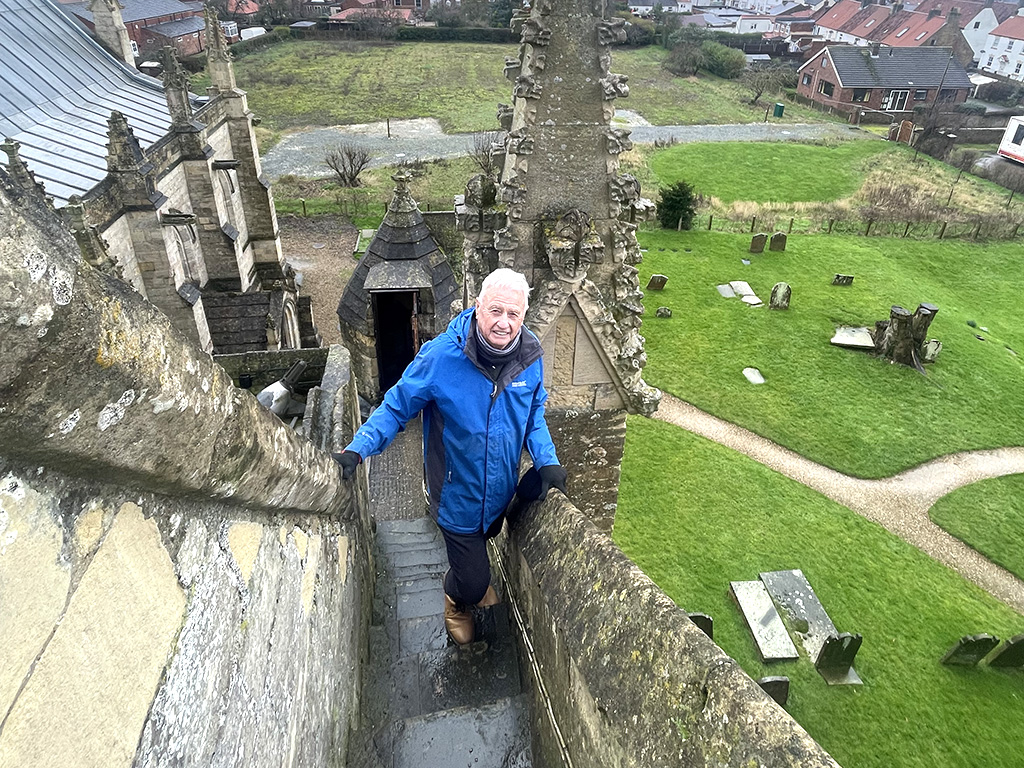
Reaching the bells involves accessing the church roof via a narrow spiral staircase on to the lower roof, then crawling through a roof passage known as the “pig trough” into the bell-ringing room. A further narrow spiral staircase then leads past the silent room up to the bell tower.
The project will involve removing all eight bells from the frame. Three will be lowered to the church floor through trap doors, two of which will be sent away for repair, while the remaining five will be stored in the silent room in the tower. Work will also be carried out to replace the wooden floor beneath the bell frame.
Malcolm added: “There is a space in the tower ironically called the Silent Room. It’s where the clock mechanism distributes power across to the hands through a series of gears and rods. Everything in this room has to be meticulously taken apart when we lower the bells from the top, because they have to pass right through the doors on either side.”
Additional works, beyond the £100,000 project, may include repairing the tower louvres and regilding the three clock faces in 24ct gold leaf. Because of the church’s Grade I listed status, the project requires a faculty from authorities in York before the eight to 12-week work window can begin.
To help the project proceed, the church is looking to secure war memorial grants and is also seeking further information on the six men commemorated. Researchers are hoping to trace surviving relatives to ensure their legacy continues when the bells are eventually able to ring again.
Fundraising events are planned throughout the year, including organ recitals by a European musician, an artisan trail featuring eight local creatives demonstrating their skills over two days, and a festival of music involving three choirs. Beyond the restoration project, the church also hopes to recruit a new team of bell ringers in the future, with training to be provided by the Roos church bell team while Patrington’s bells are being serviced.
Volunteers also aim to introduce regular tower tours for a donation, offering views across south-east Holderness, although some safety issues will need to be addressed beforehand.
The church is open every day of the year from 9am to 4pm for visitors and those wishing to pray. Holy Communion is held on the second Sunday of every month.
Dates and times of services and events are displayed on the two noticeboards and on the website, stpatrickspatrington.org.uk. The church attracts visitors from across the UK and around the world, as reflected in the visitors’ book.