


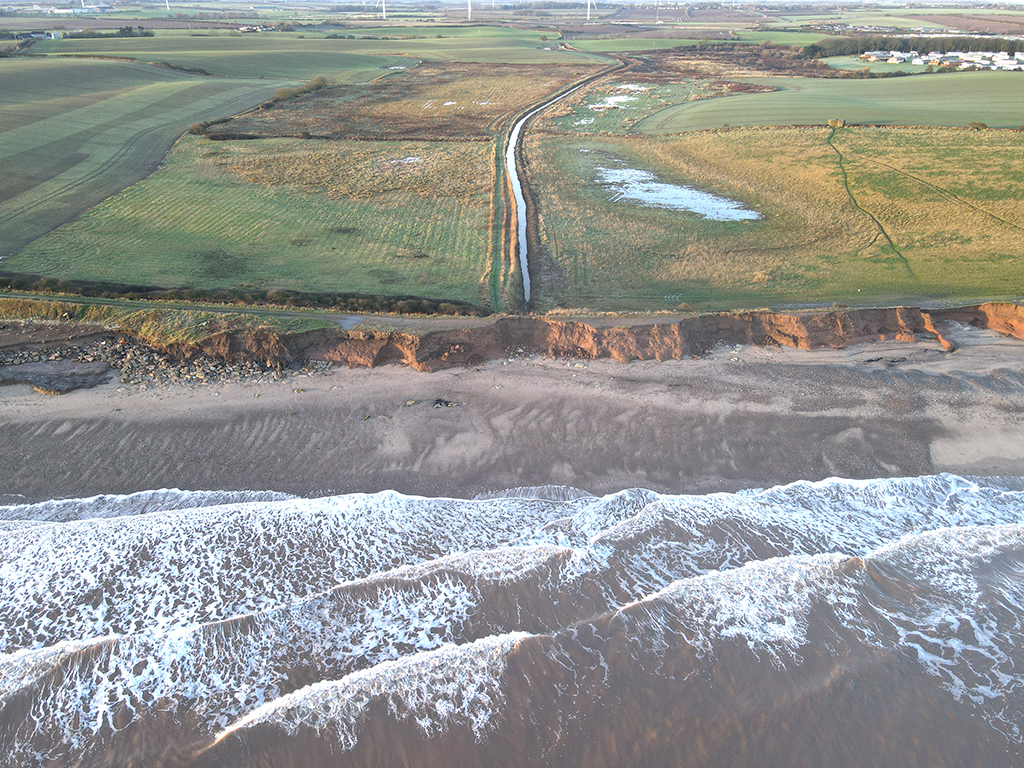
Coastal communities in the East Riding are set to benefit from £30 million to battle eroding shores, the Environment Agency has announced.
Under the Environment Agency’s new Coastal Adaptation Pilots, £18 million will be shared between coastal projects across our region, as well as in Norfolk and Suffolk, to continue advanced coastal adaptation work.
These areas have been at the forefront of developing innovative approaches to coastal transition and will help fund new long-term adaptation approaches.
This will include selective property purchases or long-term financing solutions in areas where homes face imminent risk from erosion, that could provide a sustainable model for managing coastal transition.
The new pilots build upon the £36 million Coastal Transition Accelerator Programme, which continues to support coastal authorities to trial new methods for managing erosion. This has helped residents and businesses move away from high-risk areas while sharing insights with other vulnerable communities.
Environment Agency chairman Alan Lovell said: “England has some of the fastest eroding coastline in Europe, and climate change is accelerating these pressures. Through the Coastal Adaptation Pilots, we are supporting coastal communities to plan ahead and prepare for a safer and more resilient future.
“We are committed to sharing our learning across the country so that all coastal communities at risk can benefit from the climate adaptation actions being delivered in these areas.”
An additional £12 million will also be made available to Regional Flood and Coastal Committees (RFCCs) to select projects that can deliver smaller scale adaptation readiness actions.
These projects will help communities take practical steps to prepare for coastal change, including moving community buildings away from at-risk areas, testing early warning systems that can alert residents to erosion events, and improving beach access and coastal tourism infrastructure.

The RFCCs and the Environment Agency will work with coastal authorities and communities to identify priority actions that can be delivered within the pilot period, building local expertise and capacity for future adaptation work.
Floods minister Emma Hardy said: “Coastal erosion is one of the most challenging impacts of climate change, and we will always support our towns to adapt where the forces of nature make long-term defence impossible.
“This new government investment will help some of our most at-risk coastal areas take practical action now; while building the evidence we need to support coastal communities across the country in the decades ahead.”
England’s coastline faces significant pressure, with sea levels projected to rise substantially over the coming decades. The Environment Agency’s recent National Coastal Erosion Risk Map (NCERM) showed that around 20,000 properties could be at risk from coastal change by 2105.
The new pilots will require a 10 per cent local funding contribution from participating areas. This aims to unlock more than £3 million in additional investment and demonstrate how national and local resources can work together to address this growing challenge.
The Environment Agency will manage the pilots, which are due to start in April 2026. They will provide technical support to participating areas over the coming months and will ensure that learning is shared with other coastal communities facing similar pressures.
Councillor Barbara Jefferson, East Riding Council’s cabinet member for heritage and coastal said: “This is positive news for the East Riding, which contains one of the fastest eroding coastlines in Europe.
“We will continue to work with the Government and residents to ensure the best outcomes for our area and ensure that coastal communities in our region can adapt and thrive.”