


by Sam Hawcroft
Driving into Withernsea on Friday afternoon, when I saw the coastguard helicopter flying low in the distance, its lights visible from some miles away, I knew in the pit of my stomach that something was badly wrong.
The Gazette office was closed – it was Friday, January 2, and like many businesses we were getting over the festive celebrations and gearing up to reopen properly the following Monday.
We’re a small community newspaper with a small, local team, not a massive newsroom packed to the gills with extra backroom staff ready to file copy or keep social media updated.
But that doesn’t mean we do not mobilise when something like this happens, and because we are at the heart of our community, we rely on contributors close to us – such as Darrin Stevens, who watched the search and rescue operation unfold from his balcony overlooking the prom – to be our additional eyes and ears.
There had been false alarms on the coast before, of course. But as I drove the few miles from my home to Withernsea, overtaken again and again by emergency vehicles on blue lights, I knew this was different.
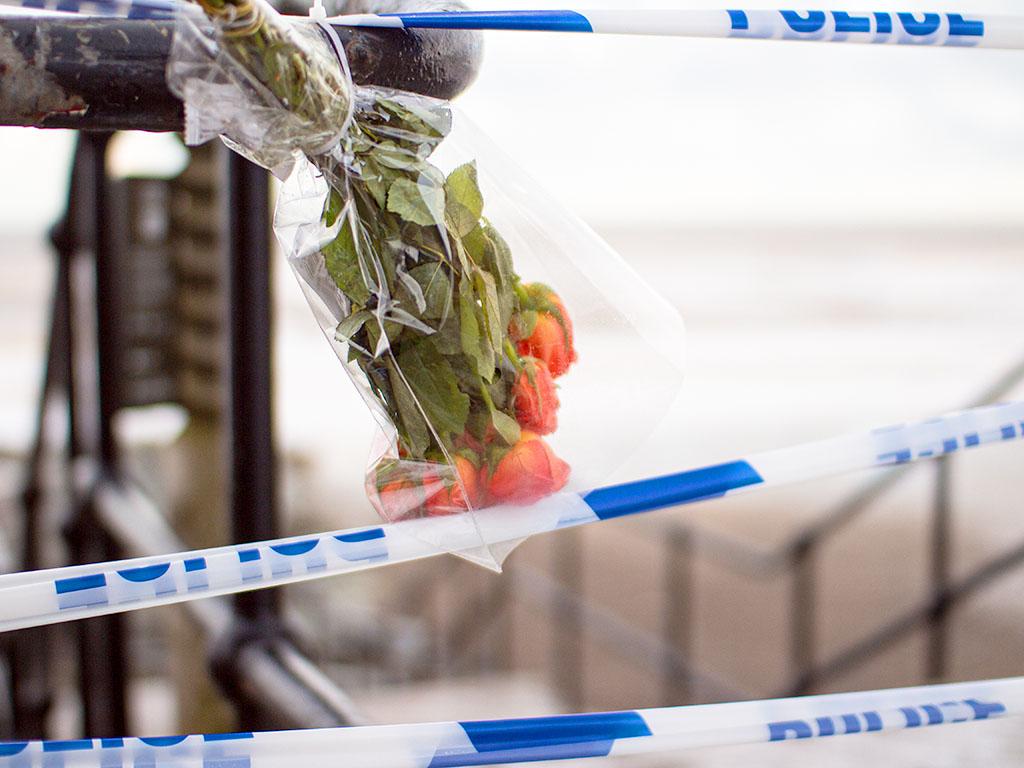
When I reached the seafront, the scale of what was unfolding was staggering. Blue lights stretched as far as the eye could see, radios were crackling, people were being directed away from the sea wall, cordons were going up along all the side streets leading to the prom. This was not a drill – it was something horrendous.
The first familiar face I came across was Rev Ian Greenfield from Withernsea Methodist Church. He wasn’t there as part of any official response. He had simply come down, as he said, to offer comfort, prayers and a listening ear to anyone who might need them.
I parked on South Promenade and walked down towards the lifeboat station. By this point it was dark, and the sea was savage.
The lifeboat crew were inside being briefed. Surely… surely they can’t launch in this? I thought. A while later the D-class lifeboat did enter the sea, but it got over a couple of waves and no further before being forced to return.
Watching the crew members troop back up the slipway and back into the station was quite emotional. These brave men were prepared, like all the other emergency responders, to put themselves in harm’s way for the greater good.
As the evening went on, I went up to Darrin’s balcony. From there, you could see the full picture: the helicopter hovering, searchlights sweeping the water, emergency crews working below. Darrin’s images began to travel far beyond Withernsea. Within hours they were being shared nationally and internationally. A small East Yorkshire seaside town was suddenly the focus of the world’s attention.
And that, really, is where the heart of this editorial lies.
When something like this happens, the world’s media descends. That is inevitable. The Gazette cannot, and does not try to, compete with national agencies or syndicated outlets on resources or reach. But where we believe we matter, where we believe we can do something those outlets cannot, is in how we approach a story like this.
We all live in the region. We are rooted here. We know the lifeboat crews, the church leaders, the shop owners, the councillors, the families. These are not anonymous figures to us. These are people we pass in the street, people we have reported on for years for very different reasons.
That brings responsibility.
We do not print sensationalist material. We do not publish things we cannot stand up, things we have not verified, things we have not seen with our own eyes or confirmed through proper channels. National outlets can ship in and ship out of town. They tell the story, move on, and never come back. We don’t have that luxury, nor would we want it. We have to live with the consequences of what we write.
That doesn’t mean avoiding difficult stories. A major loss of life on the coast is news. It has to be reported, accurately and faithfully, in words and images. In a split second, lives were shattered, and those lives became the focus of global attention. That is how news works. Pretending otherwise helps no one.
But we are living in an age of content for clicks, and that is where the line gets crossed far too easily.
Over the weekend, several online pages with names like “Daily Football Buzz” began “reporting” on the incident. They used images that were clearly fake. One showed two people running on a beach, highlighted with a red circle. Anyone who was there on Friday knows that image could not possibly have been taken at the time of the disaster. The tide was in. The conditions were appalling. Another fake page showed a picture of a helicopter airlifting a person to safety. That, of course, did not happen.
Those pages do not care about accuracy. They care about traffic, engagement, advertising revenue. They want people to click, to share, to argue. It’s dangerous, irresponsible, and it does real harm.
We have also had to contend with a volume of misinformed comments that have been both distressing and, at times, offensive. Claims that those involved “entered the water” voluntarily or were swimmers have circulated widely, despite there being no basis for that. Moderating this has been difficult and relentless.
Like the administrators of other local pages, including the main Withernsea Facebook community group, we have had to remove comments and, on occasion, turn them off entirely. We’ve had a huge influx of new followers over the past few days, which is understandable, but many are not local and some have come simply to provoke or speculate.
However, I genuinely hope that if there is a good side to all this, it’s that it pushes people towards trusted local sources.
I want to be absolutely clear here. If you have something to say about this tragedy, if you want to share a memory, a tribute, a perspective, you can trust us. We will work with you to tell your story sensitively and carefully. We are not faceless. We are a small local business. We do not prize revenue over doing the right thing. I wouldn’t sleep at night if we did.
In the aftermath of this incident, the emergency services have understandably shut down communication with the media other than releasing official statements. I understand why. Their priority is their job, and rightly so.
But it is a shame that local outlets like ours can sometimes be tarred with the same brush as more unscrupulous operators. We do not have the resources of the national media to shout about our ethics. In many ways, I know I am preaching to the converted if you’re reading this now. But it is a message I will continue to repeat: come and talk to us, if and when you’re ready. We are on your doorstep.
This tragedy has affected us deeply, just as it has affected the rest of the community. When names are released, when ages are known, it hits home in the most painful way. You find yourself thinking: she’s my age. That girl is the same age as my children. These are not abstract facts. They land close to home, and they stay there. This week we have had relatives in our office to place personal notices, and we’ve cried with them.
We must also acknowledge the heroism of Mark Ratcliffe, who lost his life trying to save Sarah and Grace Keeling. There are already calls for him to be honoured, and I have no doubt that, in time, that will happen. But for now, what matters most is giving families the space and time they need to grieve.
This has been an unprecedented tragedy for Withernsea. It has tested our community, our emergency services, and those of us tasked with telling its story. We will continue to report carefully, responsibly and with compassion. Not because it earns clicks, but because it is the right thing to do.
We are here. We will still be here when the cameras have gone, when the helicopters have left, and when the headlines fade. And that matters.