


by Sam Hawcroft
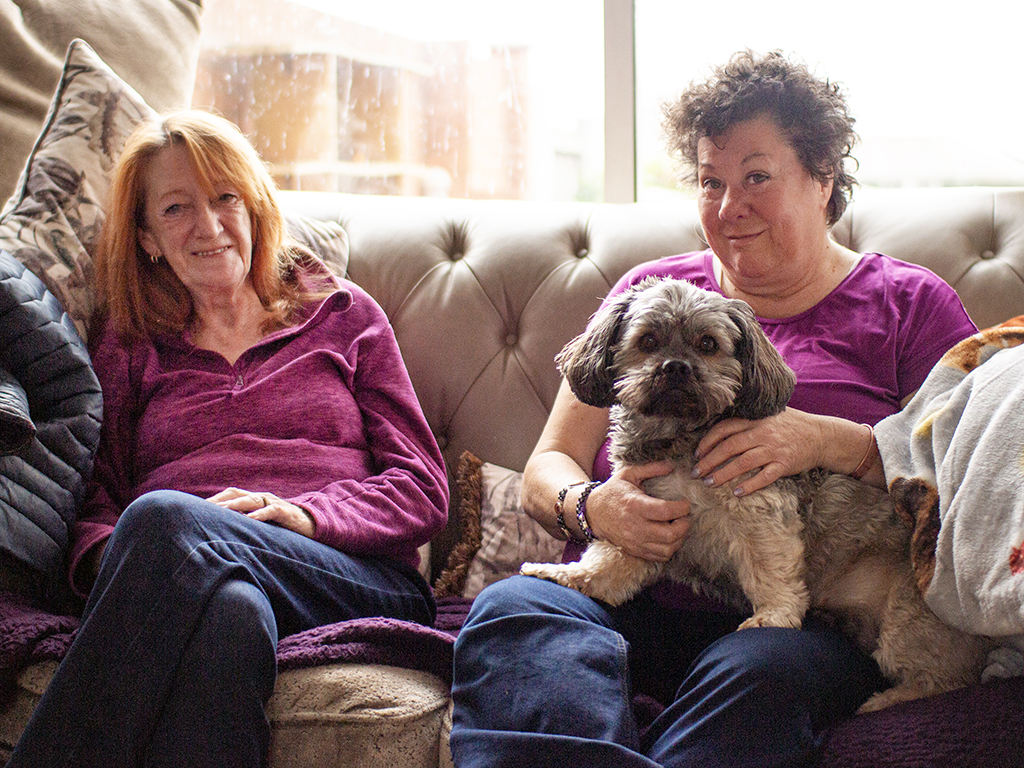
Two Withernsea women who have been through breast cancer treatment have set up a support group so people in the town and surrounding villages have somewhere close to home to talk.
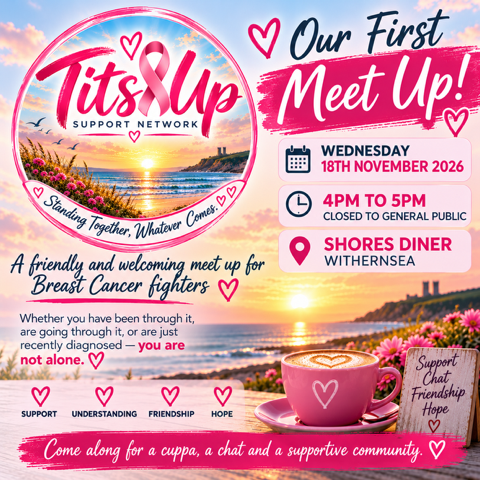
Mandi Hibberd, 59, and Sandra Thatcher, 71, will hold the first meeting of the Tits Up Support Network at Shores Diner from 4pm to 5pm on Wednesday, November 18. The group is open to people who have just been diagnosed, are having treatment or have had breast cancer in the past.
The two knew each other through the Withernsea Makers arts and crafts shop, and when a breast biopsy left Sandra with far more bruising than she’d expected, she talked it over with Mandi, who had already been through chemotherapy and surgery.
“Talking to Mandi helped an awful lot,” Sandra said. Once she started speaking about her own experience, other women at the shop began telling her about theirs, including one who had had a mastectomy more than 30 years earlier.
Mandi was diagnosed in March 2025 after finding a lump under her arm. She remembers being in the shower a few weeks into chemotherapy, trying to be as gentle as she could with her long, curly hair. “It came out in clumps, and that’s the first time I cried,” she said, recalling how she got out, picked up her hairdressing scissors and cut it herself.
Her mum was there for her and her neighbour April drove her to hospital for appointments, but Mandi often spent the days after chemotherapy in bed, with little interest in what was happening outside. “I wasn’t in a talking space, and I think I hibernated for a while,” she said.
Chemotherapy shrank the tumour from 28mm to 15mm, Mandi said, and in September she had surgery to remove the lump and 10 lymph nodes. She was full of praise for the Castle Hill Hospital nurses who helped her cope with a fear of needles, remembering how one kept her distracted while another worked on her arm.
Mandi said she was told at an oncology appointment in October 2025 to expect a call about radiotherapy within four to six weeks, but it took about 21 weeks.
“Christmas came, Christmas went, New Year came,” she recalled. She is still having follow-up appointments and said her first mammogram since the operation had shown “no evidence of disease”. She remembers people assuming she was cured as soon as she’d had chemotherapy and surgery.
Sandra found a lump in May this year after feeling a twinge she had put down to her bra strap, and her GP referred her to Castle Hill for a mammogram, an ultrasound and biopsies.
The cancer had been caught early and she was home by the evening of July 22, after day surgery to remove the lump and two lymph nodes. The nodes showed no sign of cancer, she said, and her radiotherapy appointment came through for late November, in line with what she had been told to expect – unlike Mandi’s experience.
“I cannot praise them enough at Castle Hill,” Sandra said, “but it is a hell of a trek.” Mandi said she allows an hour and a half to get there for an appointment and that the journey can mean two buses each way. The prospect of an hour’s journey to Hull for a support group can be enough to put people off when they’re already feeling unwell, Sandra added.
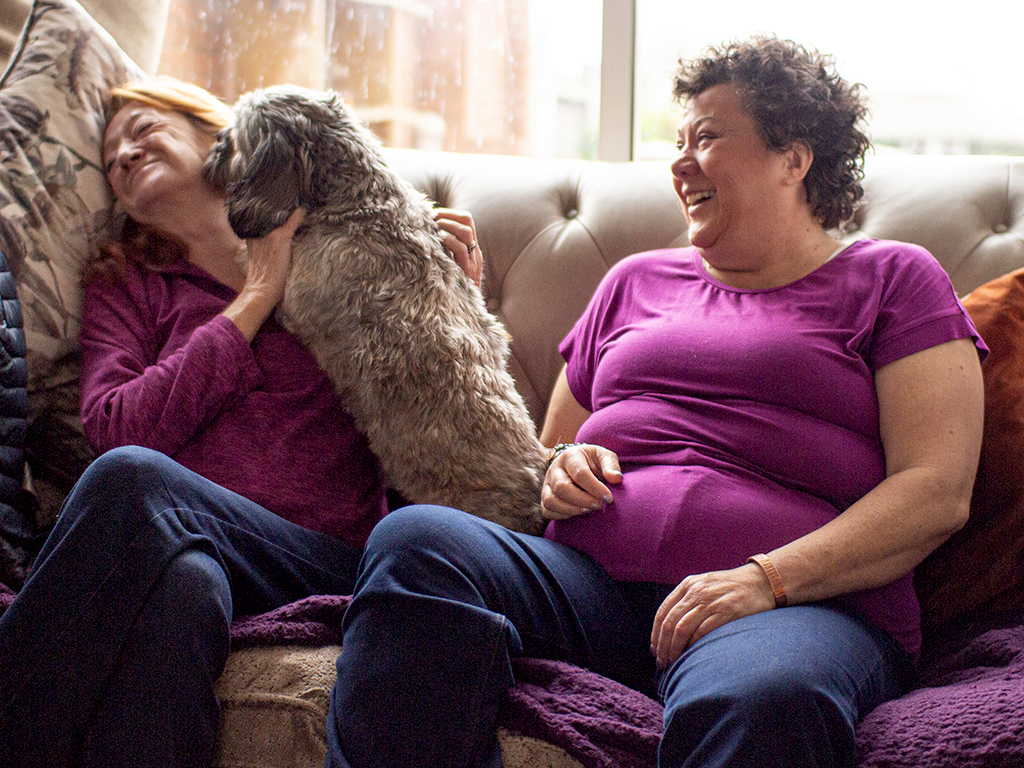
The pair had talked about holding a fundraising afternoon tea, but they eventually settled on a meet-up where people could say how they were getting on and share what had helped, such as the front-fastening bra Sandra found easier to put on after surgery. “It’s the little practical tips that we want to pass on,” she said.
When Sandra’s husband pointed out that the original logo showed a woman, they changed it to reflect the fact that breast cancer can affect men too – although fewer than one per cent of cases in the UK are in males, according to Cancer Research UK.
The name of the group is a nod to how quickly life can turn upside down after a diagnosis as well as to the humour that has helped them both.
“You have to have a laugh,” Sandra said.
The group will have the diner to itself for the hour, and over a cuppa Mandi and Sandra will ask people whether they’d like to meet each month. Sandra has set up a WhatsApp group so people can stay in touch in between, giving them somewhere to “scream or shout or cry”, she said, “because you’re talking to somebody who has actually been there, been through it.”
Partners are welcome to come along, too.
Sandra remembers walking on the beach with her husband when he told her, “I wouldn’t like to be in your head right now,” and realising how much he was going through himself.
Mandi supported her late husband when he had a brain tumour, and she said the date she and Sandra settled on for their first meeting would have been, poignantly, his 70th birthday.