

By Sam Hawcroft
Withernsea is not in the grip of a crime wave – but police say they can only tackle the problems that residents actually report.
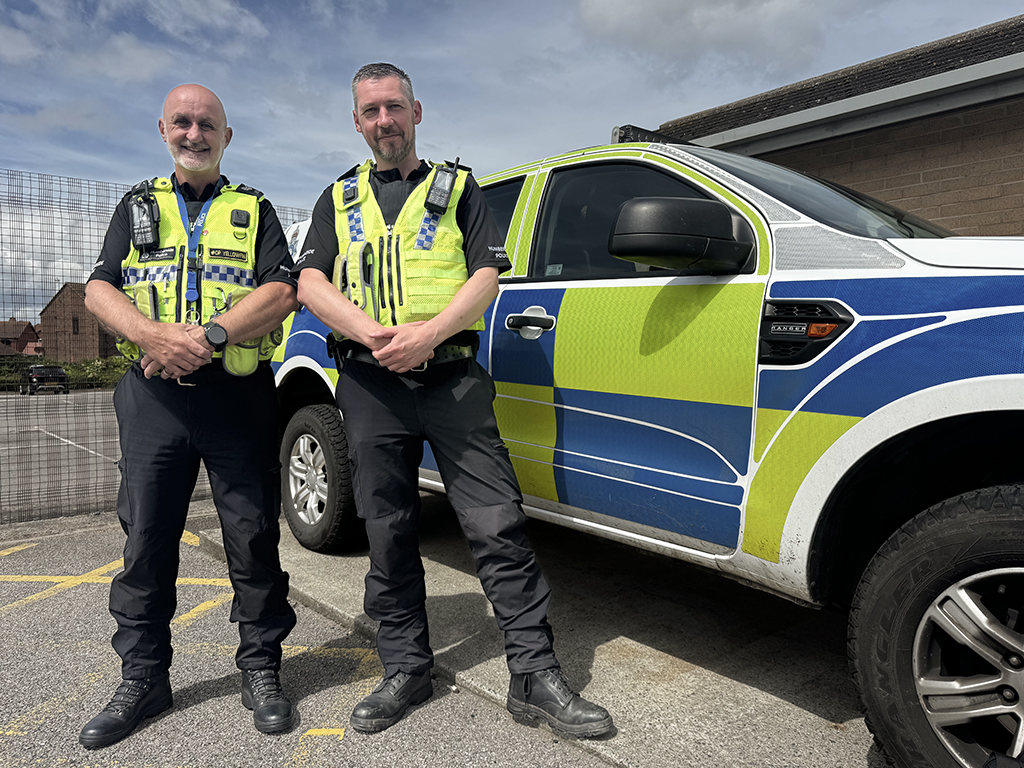
That is the central message from PC James Stothard and Sgt Mick McLaughlin, of Humberside Police’s neighbourhood policing team (NPT) in Withernsea, who have moved to reassure people that the town remains a safe place to live despite recent concerns over antisocial behaviour, criminal damage and arson.
Many of the reports have been isolated, linked to specific individuals or addresses, or made worse by a perception on social media that the problem is bigger than police figures show. Their plea is clear: if something happens, report it to police. Posting about an incident online might raise awareness, but it does not allow officers to log it, assess risk, identify patterns or send patrols where they are needed.
Antisocial behaviour remains one of the neighbourhood team’s regular priorities, but PC Stothard said officers needed accurate reports from the public to know where problems were emerging.
He said: “ASB is our ‘bread and butter’. We are always looking at it, because so many incidents fall within the massive umbrella that is ASB. We have to target specific aspects of it, or particular problems that we’re seeing emerging, and that comes from interrogating our recording systems.”
Recent figures show an increase in reports of antisocial behaviour in Withernsea, from three to nine, but Sgt McLaughlin said the numbers remained relatively small compared with many other areas. Some of the reports related to a recent travelling encampment near Waxholme Road, while others were linked to one particular address. In both cases, the incidents were specific rather than evidence of a problem affecting the whole town.
Sgt McLaughlin said: “Although there was an increase, they were quite isolated incidents. It’s specific areas and specific people. We want to reassure people that it’s not across the board.”
PC Stothard said social media often created a different impression, because individual incidents were discussed widely and repeatedly online. He said: “This is a problem we fight on a daily basis, because every incident of ASB is talked about on social media. So people think the problem is bigger than it is, even if they haven’t experienced it directly themselves. They see someone else experiencing it on Facebook and perceive it to be a problem in the town.”
However, that does not mean concerns are being dismissed. Police records, risk assessments and patrol plans are based on what is reported.
One recent example is the fires at the Hull Road playing fields used by Withernsea AFC. Police initially received one report, but later established there had been other incidents that had not been reported to them. Four young people have since been identified and will be dealt with through the appropriate process, including referrals to the fire safety team.
PC Stothard said: “We weren’t ordinarily patrolling the playing field because we hadn’t had any issues on there. It hadn’t been a place where kids had been gathering, as far as we were aware. But now we’re aware of it, we will see them more often.”

Antisocial behaviour is not simply a youth issue, the officers said. Some incidents involve young people, but others involve adults, neighbour disputes or repeat problems at particular addresses. Where children and teenagers are involved, the aim is not to criminalise them unnecessarily, but to step in early and try to change behaviour.
Police can use lower-level engagement, the Fairway process and community resolutions where appropriate. That might involve young people apologising, putting right damage or being referred through youth justice and other agencies. Sgt McLaughlin said: “We don’t want to criminalise kids – that’s not our point. We try to move away from criminalising kids straight away. It’s about changing the behaviour.”
The NPT also works closely with Withernsea High School. Officers go into the school every three weeks to speak to pupils identified by staff, often before those young people have come to police attention in the wider community. PC Stothard said: “The kids are much more relaxed in school to talk to you than they are out there or at home. We get to speak to kids before they’ve actually come to our attention, so we know them already.”
The work also gives officers a chance to have positive follow-up conversations. PC Stothard added: “If the issues they’ve been brought to our attention for at school have improved, they do actually bring them back to see us to tell us that. Then we get a positive interaction with them again, saying, ‘Well done for listening to what we’ve said.’”
Patrols are guided by a beat plan, which focuses officers on areas where issues are known or emerging. The plan changes depending on the time of year, with the summer holidays, the seafront and late-opening premises all influencing where police spend their time. Sgt McLaughlin said: “It’s very seasonal here. We know during the school summer holidays the amusements will become a central focus for us for potential antisocial behaviour, so that will be the area we get staff to patrol. If there is an emerging problem, then we’ll update our beat plan to see what we’ve got. It’s fluid and dynamic.”
The team also regularly visits areas where drug dealing is suspected, gathering details of vehicles, times and people involved so enforcement action can be taken where appropriate.
Withernsea does not have the county lines issues seen in larger towns and cities, Sgt McLaughlin said, but police will act when reports come in. PC Stothard added: “You will never resolve a drug problem because there will always be people who take drugs. But it’s not endemic in Withernsea.”
Partnership work is another major part of the response. Meetings are held roughly every six weeks with police, housing providers, the local authority, schools, youth justice and other partners. Those meetings look at repeat victims, repeat offenders, vulnerability and problem addresses, with agencies agreeing who will take ownership of particular issues.
The team also works with local councillors, who pass on residents’ concerns about issues such as speeding, antisocial behaviour and community safety. The three South East Holderness councillors Sean McMaster, Jon Dimberline and Lyn Healing are in regular contact with police, with information from them helping officers decide where to focus attention.
PC Stothard said: “I think the relationship is really good. They all want to do good things for the local community. They all have my email and they all contact me with various issues.”
As recently reported in the Gazette, the closure of the front counter at Withernsea police station this month has also raised concerns among residents and local politicians, but the station itself has not closed and officers are still working from the building. PC Stothard said: “I’ve seen people saying Withernsea police station is closed. It’s not. The same police are still working out of here. It is just the front-facing window that is closed.
“If you come to the police station and ring the bell, and there’s a police officer in here, they may answer it. If they don’t, it’s not because they’re ignoring you – it’s because they’re on the phone, they’re busy or they’re doing other things. There’s no guarantee you’ll get to speak to a police officer if you come directly here.”
Instead, residents should use 101 or online reporting for non-emergency matters, and 999 in an emergency. Regular police surgeries in Withernsea and surrounding villages including Roos, Patrington and Keyingham also give people the chance to speak to officers face to face.
Sgt McLaughlin said one of the challenges was reaching those who did not use the internet or social media, particularly older residents who might not see online updates or local priorities. He said: “How do we get that message out? Please come and speak to us at one of our surgeries if you’ve got a problem.”
Both officers reiterated that Withernsea should not be defined by isolated incidents or online perception. Sgt McLaughlin said: “Withernsea is a safe place to live.” He added: “There is not a crime problem. There is not a drug problem. Just let us know what’s happening.”