

By Sam Hawcroft
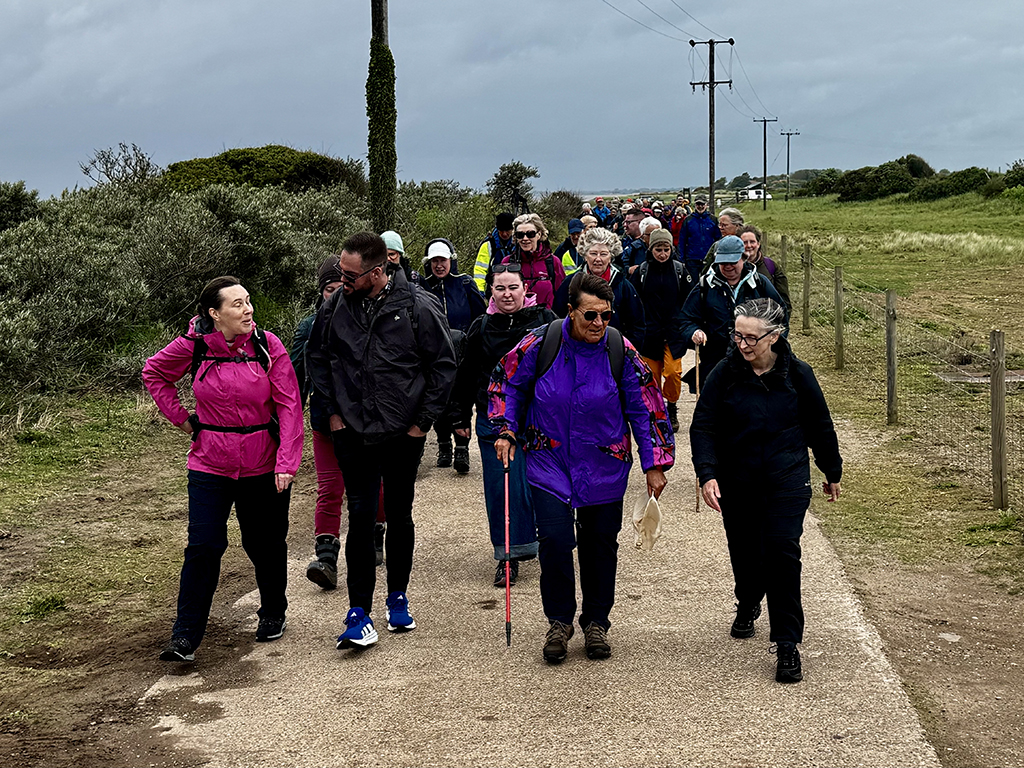
The Bishop of Hull led nearly 70 pilgrims to the tip of Spurn Point in a journey of prayer, silence and reflection honouring a largely forgotten Anglo-Saxon saint.
The Rt Rev Dr Eleanor Sanderson was joined by Rev Philip West, deanery priest for South Holderness, on a walk dedicated to the memory of St Wilgils, a seventh-century hermit believed to have settled at Spurn.
The eight-mile route took the group from the Yorkshire Wildlife Trust Discovery Centre all the way to the Point itself, where the river meets the sea.
The day began with a briefing from Rev West, who told the group of 67 walkers that the idea had come after Bishop Eleanor had learned more about St Wilgils and the saint’s links with Spurn.
Rev West said: “This all came about because Bishop Eleanor got hold of a book about St Wilgils and said, ‘We must go where St Wilgils lived and reclaim it.’ Then she found out that I organised pilgrimages, and that’s how it began.”
The walk also featured a banner created by Mary Mathison, wife of local historian Phil Mathison, whose research has helped bring the story of Wilgils back to wider attention.
He said Wilgils was believed to have been born around AD635, probably just north of York, and educated at Ripon, then an early ecclesiastical centre. He later married and became the father of St Willibrord, who went on to become a missionary to the Frisians. Wilgils then entered monastic life and, driven by religious devotion, sought out one of the remotest places he could find. Spurn, then known as Cornu Vallis, is believed to have been that place.
Mr Mathison said: “He came here in about AD669. He never saw his son again, as far as we know. The hermitage he set up was blessed by the king, who granted him some land, and he also built a chapel dedicated to St Andrew and, some say, to St Mary. That is the main background – he was associated with here, he formed the hermitage here and his son became very famous.”
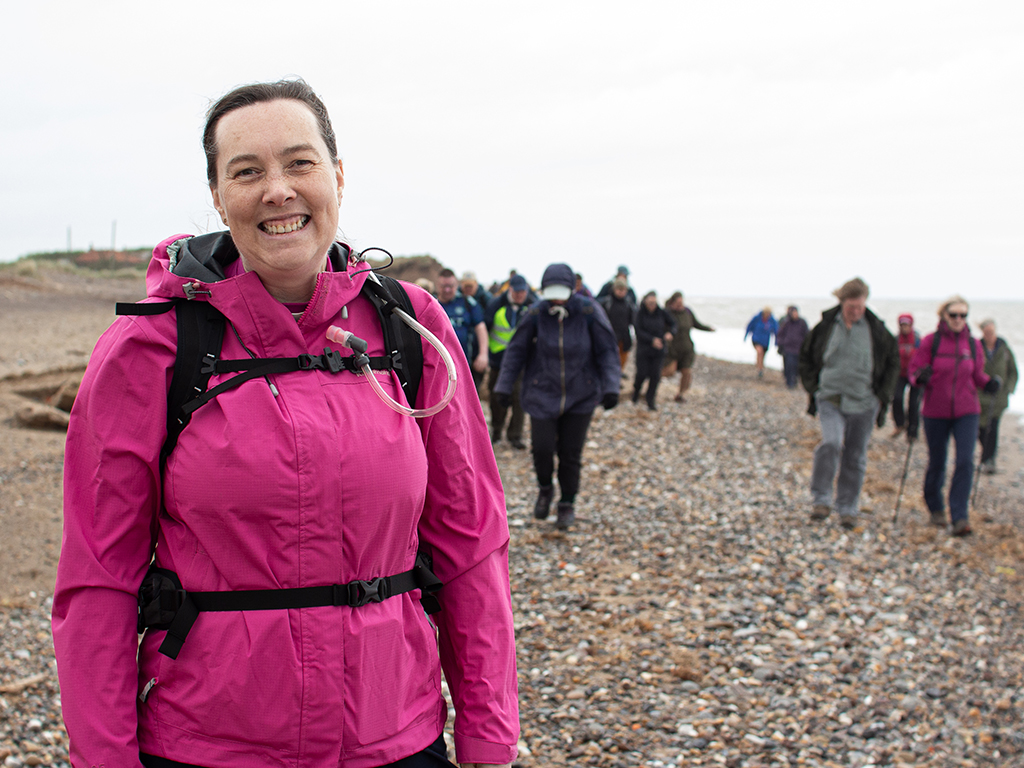
For Bishop Eleanor, the pilgrimage had been several years in the making, after she first visited Spurn with her family following her arrival as Bishop of Hull.
She said: “When I first arrived here, we came out as a family because it is such an amazing place to come to. We then discovered St Wilgils in a book by Phil. He’s one of these hidden saints.”
Born in Yorkshire, she spent many years living in New Zealand before returning to the county. She said: “It feels really significant to go to these places that have been important markers in the outpouring of faith that began in this land.
“In New Zealand and Aotearoa, there are a number of pilgrimages going back to significant places, but I haven’t had the chance to do it in this land. So it feels really important.”
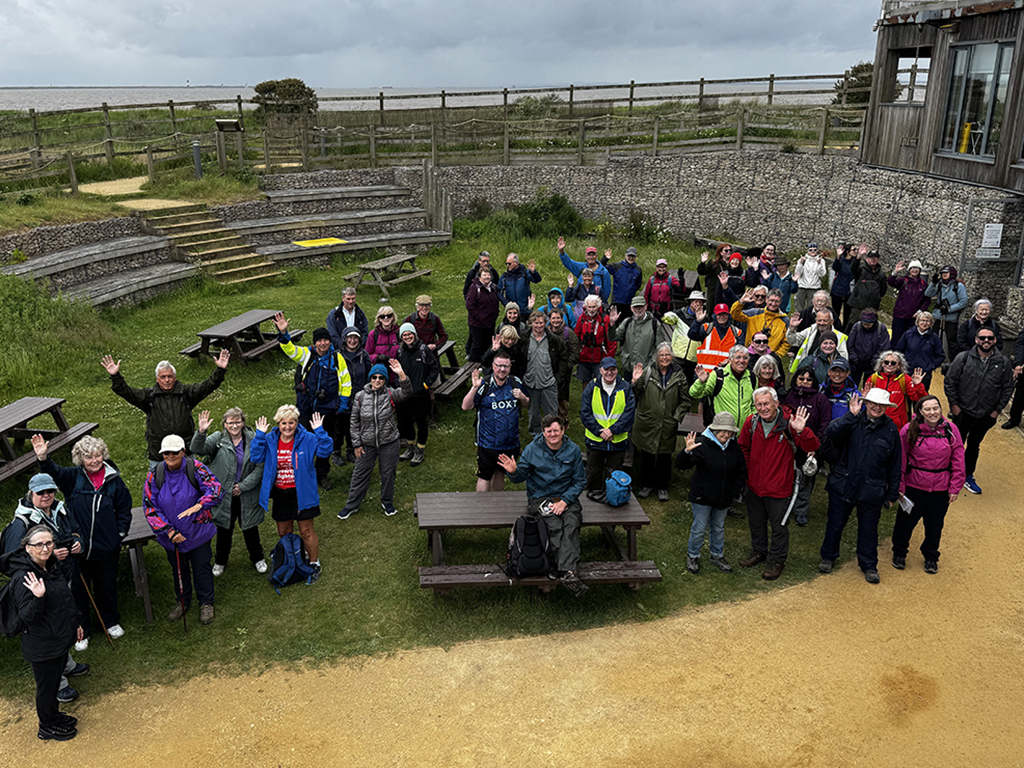
One of the most striking moments of the day came as the group approached the lighthouse, being asked to walk in silence through a meadow speckled with bright yellow birds’ foot trefoil. Rev Clive Hall, of St Matthew’s Church in Withernsea, said that had stayed with him.
He said: “When we were silent, I was walking more slowly and it was only then I noticed the birds singing. No one really heard them singing until we got to that point. It was brilliant to see so many people joining us. Philip has put this together very well.”
The final stretch took the group to the end of Spurn itself. As they reached the Point, a large tanker appeared to pass startlingly close to the shoreline as it travelled from the sea into the Humber, giving walkers a vivid reminder of Spurn’s position at the mouth of one of the country’s busiest estuaries. Pilgrims were then free to make their way back at their own pace.
Mr Mathison added: “I think in this digital age, people are looking for something extra now. People are starting to look for physicality. I’m glad they have brought some attention to St Wilgils, because people don’t know enough about the local history. When you dig, there are some brilliant stories.”
For many of those taking part, it was a chance to rediscover a hidden chapter of local Christian history, spend time in silence and experience Spurn as a place where landscape, faith and memory meet.